
Solar Battery Storage
Demand charges, rate volatility, and grid instability are not abstract risks, they directly impact operating margins.
Greenlink designs and integrates commercial-scale battery storage systems that reduce peak demand exposure, stabilize long-term energy costs, and improve facility resilience.
- 10 Year Track Record
- Veteran Owned
- A+ Rating
Why choose Greenlink Battery Storage?
1. Power When You Need It Most
Battery storage systems provide reliable backup power during outages, peak demand periods, or emergencies—keeping your essential systems running and your operations or household secure when the grid goes down.
2. Smarter Energy Management
Greenlink designs battery systems that do more than store energy. They intelligently manage when and how power is used, helping you lower utility costs, reduce peak demand charges, and make the most of your renewable energy production.
3. Seamless Integration with Solar
Our battery solutions are engineered to work hand-in-hand with your solar system, storing excess power generated during the day for use at night or during outages. This creates a flexible, self-sustaining energy ecosystem built around your specific needs.
4. Local Expertise and Incentive Guidance
As an Illinois-based clean energy contractor, Greenlink helps you leverage available incentives, rebates, and tax credits for energy storage systems. We navigate utility interconnection and permitting requirements to ensure your project delivers both performance and value.
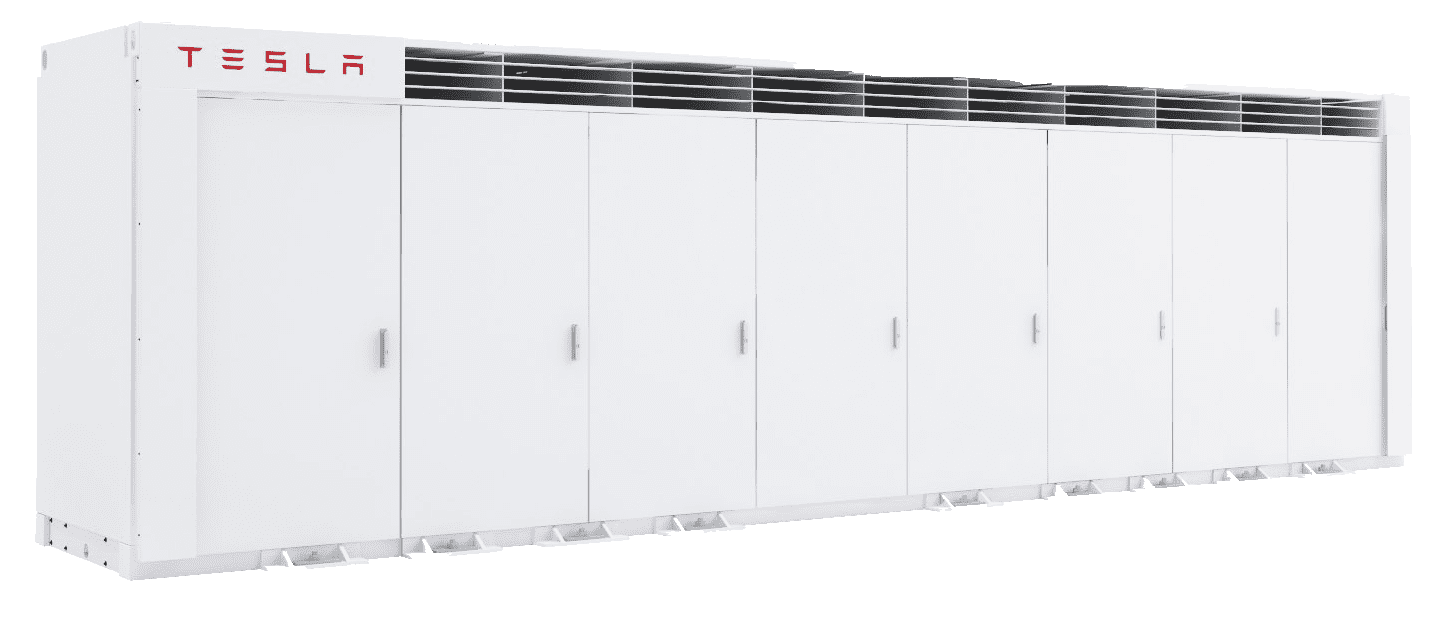
Power meets efficiency with Tesla Megapacks
The Tesla Megapack delivers large-scale, U.S.-built energy storage for peak demand management, grid stability, and backup power. Integrated by Greenlink, Megapack systems help Illinois businesses and communities store renewable energy, reduce costs, and strengthen resilience—all while supporting domestic clean energy manufacturing and taking advantage of federal incentive opportunities.
What Is Commercial Battery Storage? A Guide for Business Owners
Commercial battery storage systems store electricity — from the grid, onsite solar, or both — and deploy it strategically during high-cost or high-demand intervals.
Unlike small-scale backup systems, commercial storage is engineered around:
- Load curve analysis and peak interval mapping
- Utility rate modeling and tariff structure alignment
- Incentive stacking and capital structuring
- Long-term operational and financial forecasting
Whether you’re evaluating battery backup solutions for commercial buildings, standalone storage for demand charge reduction, or battery storage for multifamily properties, system design starts with your load profile and rate structure, not a product catalog.
It is a controllable energy asset designed to improve both financial performance and operational continuity, not simply a backup power source.
How Commercial Battery Storage Systems Reduce Operating Costs
Commercial battery storage is a financial strategy as much as a technical one.
Through detailed load analysis and utility rate modeling, Greenlink identifies demand charge exposure, peak intervals, and tariff optimization opportunities specific to each facility. Storage systems are then engineered to discharge during high-cost peak windows and recharge strategically based on rate structures, onsite solar production, or both.
This targeted approach reduces:
- Peak demand charges: often one of the largest line items on a commercial utility bill
- Time-of-use rate exposure: by shifting consumption away from high-cost intervals
- Grid dependency during instability: improving operational continuity without relying solely on utility supply

Schedule a Commercial Energy Storage Assessment
Request a detailed load and demand analysis to determine whether battery storage can reduce operating costs and strengthen resilience at your facility.
Greenlink serves commercial and multifamily properties across Northern Illinois with engineered, infrastructure-grade energy storage solutions.
Operational and Financial Benefits of Solar Battery Storage for Businesses
When engineered to a facility’s specific load and rate profile, commercial storage delivers measurable outcomes:
- Reduced peak demand charges and more predictable monthly utility costs
- Improved cost stability for long-term capital planning and budgeting
- Increased resilience for mission-critical operations and continuity planning
- Optimized performance when integrated with onsite solar assets
- Strategic eligibility for demand response and grid services programs (where applicable)
- Enhanced property valuation and long-term asset competitiveness
Greenlink evaluates storage as a long-term infrastructure investment, not a standalone product purchase. Every system is sized and structured to deliver financial performance over its full lifecycle.

Battery Storage FAQs
How does energy storage for peak demand reduction work in a commercial facility?
The only way to determine this accurately is through a detailed load and tariff analysis. In many Illinois commercial facilities, demand charges represent a significant share of the total electric bill — making storage a targeted cost-control tool rather than a generic backup solution.
What size battery system does a commercial building typically need?
System size depends on load profile, peak demand behavior, operational criticality, and financial objectives. Commercial systems can range from 100 kW configurations to multi-megawatt deployments. Sizing is determined through engineering analysis.
Can battery storage work without solar?
Yes. While solar-plus-storage improves long-term economics, standalone battery systems can reduce demand charges, manage time-of-use rates, and improve resilience independently.
Are there incentives available for commercial battery storage in Illinois?
Incentives vary depending on system configuration, ownership structure, and whether storage is paired with solar generation. Greenlink evaluates incentive eligibility as part of every commercial storage assessment.
Do I need a Smart Panel or upgraded electrical service for a charger?
In some cases, yes—especially if your current electrical panel is near capacity. Our team assesses your electrical system and recommends upgrades if needed.
Can you help businesses set up paid or public charging stations?
Yes. We install networked chargers with payment processing, usage tracking, and load management for retail, workplace, and fleet applications.